Start selling
Pricing your products in Egypt — without losing money while thinking you profit
Most small stores price by guesswork or by copying a competitor. How to work out your real cost and set a price that leaves you an actual margin.
2 min read
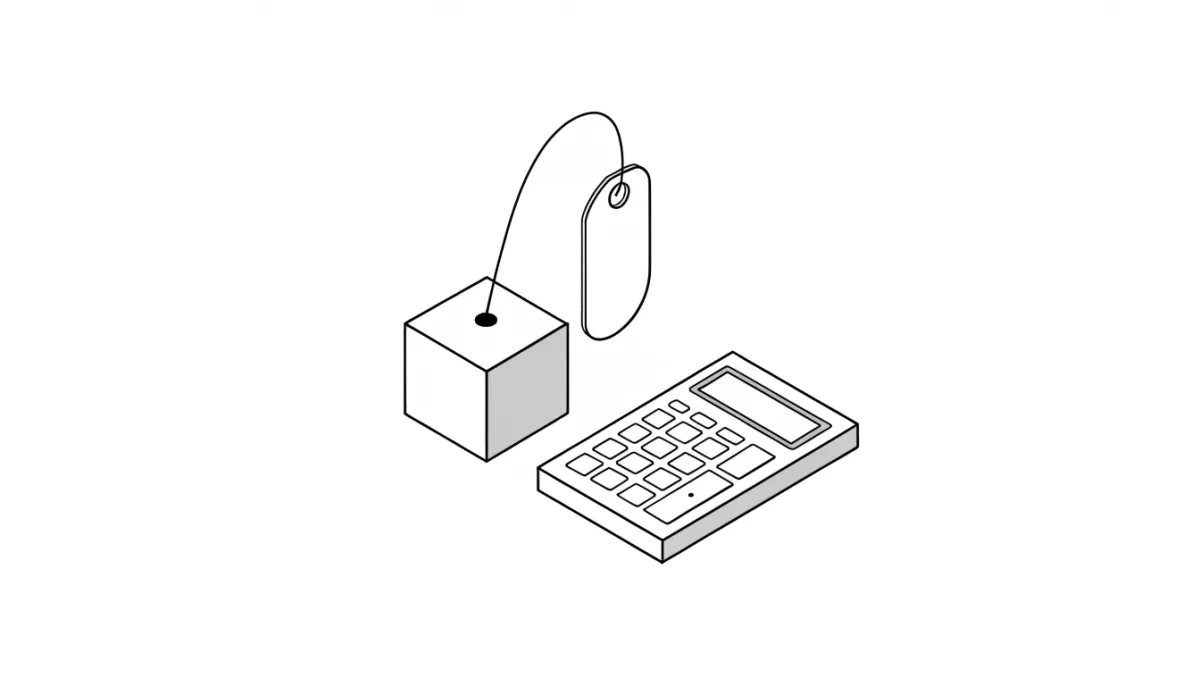
The most common sentence in pricing is "I'll take the competitor's price and go a bit under." The most common reason small stores close is that they did.
That competitor may buy in larger quantities, ship more cheaply, or be losing money while waiting on funding. You cannot see their arithmetic.
Start from cost, not from the market
Write down the cost of one unit:
- Purchase or manufacturing price
- Shipping from your supplier to you
- Packaging
- Your return rate — if 10% of orders come back, every unit sold has to carry part of that
- The cash collection fee, if you sell cash on delivery
The last two are the ones always forgotten, and they are what turns a 15% margin into a loss.
Only then look at the market
Now — once you know the lowest price you can sell at without losing money — look at your competitors.
If the market sells below your cost, the problem is not your pricing. It is your cost. Either buy cheaper or sell something else.
Margin is not one number
Not every product needs to earn the same:
- Products that bring new customers — a thinner margin is fine, they open the door.
- Products people buy again — these are what you live on.
- Add-ons — usually the highest margin: the belt with the trousers, the socks with the shoes.
Discounts teach customers to wait
A discount every week means nobody buys at full price. The customer has learned another one is coming.
If you need discounts, attach them to a reason: an occasion, clearing stock, a first order. The reason is what keeps the regular price credible.
A discount with no reason is not an offer — it is your real price, with a bigger number written above it.
Revisit your prices every three months
Costs move in Egypt. A courier rate changed, a supplier raised theirs, the pound moved — and a price that earned six months ago may be losing today without your noticing.
Set a reminder every three months to redo the arithmetic. You do not have to change the price each time, but you do have to know.
Two of those costs have guides of their own: shipping and the collection fee on a cash order. And if you are still choosing where to sell, the platforms available in Egypt differ on exactly these numbers.